
Can You Question a Hospital Bill After You've Already Paid It?
Paying a hospital bill doesn't mean you accepted every charge. Thousands of patients identify billing concerns after payment and successfully pursue corrections. Here's how.
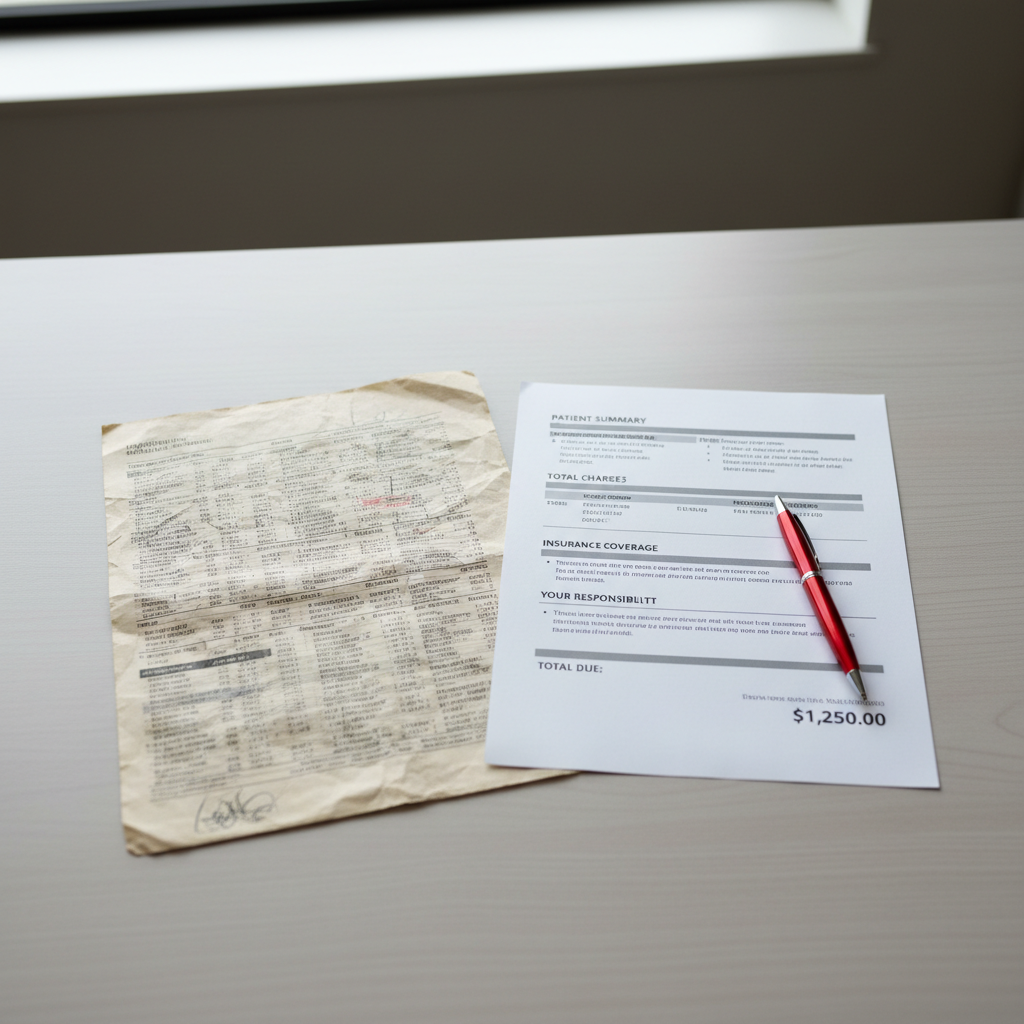
Key Takeaways
- Payment satisfies the obligation as presented — it does not confirm the accuracy of every line item
- State statutes of limitations typically give patients several years to pursue overpayment claims
- A formal written request with specific charge documentation is required for post-payment review
- Duplicate charges, potential upcoding, phantom charges, and bundling concerns are the most commonly identified patterns
- Billyze produces a structured informational report that can be used as the basis for a formal clarification request
Can You Question a Hospital Bill After You've Already Paid It?
Paying a hospital bill doesn't close the case. Thousands of patients identify billing concerns weeks or months after submitting payment — and many of them successfully recover overpayments. The idea that paying means accepting is a common and costly misconception.
Hospital billing concerns don't become legitimate just because a check cleared. What changes after payment is the process, not your rights.
Payment Does Not Equal Agreement
When you pay a hospital bill, you're satisfying a financial obligation as it was presented to you. You are not signing off on the accuracy of every line item.
If you paid before reviewing your itemized bill — or before you had any reason to believe concerns existed — a formal clarification request filed afterward stands on legitimate ground. The relevant question is whether the charges were accurate, not whether you already paid them.
Hospitals are not entitled to keep money collected in error. Overpayment recovery is a recognized process in healthcare billing, and it applies to patients just as it applies to insurers.
How Long Do You Have to Request a Review After Payment?
There's no single federal deadline. The timeline depends on several factors:
Your State's Statute of Limitations
Most states give patients several years to pursue overpayment claims. In many states, the general contract statute of limitations — typically three to six years — applies to healthcare billing.
Your Insurance Plan's Rules
If your insurer was involved in the payment, they may have their own review timelines. Some plans allow members to request a re-examination of a processed claim if new information comes to light.
The Hospital's Internal Policy
Many hospitals have a formal billing review or patient advocacy department. Most will engage with a documented, specific request regardless of when it's filed — particularly if the concern is clear.
The practical reality: the sooner you act after identifying a concern, the easier the process.
What You'll Need to Build a Post-Payment Review Request
Get your itemized bill. If you don't have one, request it from the hospital's billing department. Our guide on [how to request an itemized bill from a hospital](/blog/how-to-request-itemized-bill-hospital) walks through exactly how to do this.
Pull your Explanation of Benefits (EOB). Your insurer's EOB shows what they were billed, what they paid, and what portion was assigned to you. Comparing the EOB to your itemized bill often surfaces the clearest potential concerns.
Identify the specific charges in question. Your request needs to name exact line items, dates of service, and charge codes — and explain why each warrants review.
Document what you paid and when. Bank statements or payment confirmations establish your payment record and create a timeline the hospital must respond to.
Write a formal clarification letter. A written letter sent via certified mail creates a record and puts the hospital on notice that this is a formal request. Reviewing [how to write a hospital billing clarification letter that gets results](/blog/how-to-write-hospital-bill-dispute-letter) gives you the structure.
What Kinds of Concerns Are Worth Pursuing After Payment?
- **Potential duplicate charges** — the same procedure or supply billed more than once
- **Charges for services not received** — items billed for a consultation that never happened or a medication you weren't given
- **Potential upcoding** — a procedure billed at a higher complexity level than what was performed. Understanding [how potential upcoding works](/blog/how-to-spot-upcoding-hospital-bill) is a useful starting point.
- **Incorrect insurance application** — if your insurer processed the claim incorrectly and you were charged more than your actual cost-sharing
- **Bundling concerns** — services billed separately that should have been grouped under a single code
What Happens After You Submit a Clarification Request
Hospitals are generally required to acknowledge and respond to formal billing requests. Most have a patient billing review process that involves re-examining the original claim against clinical documentation.
If the review confirms a concern, the hospital will typically issue a refund, apply a credit toward any outstanding balance, or coordinate a correction with your insurer.
If the hospital maintains the charges were correct, you can escalate to your state insurance commissioner, file a complaint with your state health department, or engage a patient advocate to review the claim independently.
Follow up in writing every 30 days and keep a complete paper trail.
Where Billyze Fits In
If you've already paid and you suspect something wasn't right, Billyze gives you the structured analysis you need before you submit a formal request.
For $79, Billyze reviews your itemized hospital bill line by line — checking for potential duplicate charges, coding inconsistencies, unbundled services, and charges that don't align with documented care. The output is a structured informational report that identifies which specific charges warrant a closer look.
When the findings support a formal communication, Billyze produces an informational letter template you can send directly to the hospital's billing department. It doesn't guarantee a refund — but it gives you a documented, organized starting point.
You Have More Leverage Than You Think
If potential concerns existed in what you paid, you are entitled to a review regardless of when you catch them. Hospitals process overpayment corrections regularly — to insurers, to Medicare, and to individual patients.
Start with your itemized bill. Compare it against your EOB. Identify specific charges that don't match your care. Then build a written record and submit a formal clarification request.
The money you've already paid doesn't have to be the final word.
[Upload My Bill — $79](/upload)
Frequently Asked Questions
Related Articles
How to Write a Hospital Billing Clarification Letter That Gets Results
A vague complaint to a hospital billing department rarely goes anywhere. A formal, documented clarification letter citin…
Duplicate Billing on a Medical Bill: What It Is, Why It Happens, and What to Do
Duplicate billing on a medical bill happens more often than hospitals admit — and patients rarely catch it without an it…
How to Request an Itemized Bill from a Hospital (And What to Do Once You Have It)
Most patients pay hospital bills without ever seeing a line-by-line breakdown of what they were charged. Requesting an i…
Ready for a review of your hospital bill?
Get a full AI-powered review, a line-by-line analysis, and an informational letter template — all for a flat $79.
Upload My Bill — $79